Your water heater doesn’t fail without warning. It gives you signals for weeks or months before it stops working entirely. The problem is that most homeowners don’t recognize those signals until they’re standing in a puddle or taking a cold shower.
If you catch these signs early, you can often repair the unit and extend its lifespan by years. If you ignore them, you’re looking at an emergency replacement, potential water damage, and a much bigger bill.
Here are the seven warning signs that Asheville homeowners miss most often.
1. Your Hot Water Runs Out Faster Than It Used To
If showers that used to stay hot for 15 minutes are now going cold at the 8-minute mark, your water heater is struggling. The most common causes are sediment buildup inside the tank, a failing lower heating element on electric units, or a thermostat that’s drifting out of calibration.
Asheville’s water measures around 8 grains per gallon of hardness, which means mineral sediment accumulates faster here than in areas with softer water. That buildup insulates the bottom of the tank where the burner or element sits, making the unit work harder and recover slower.
Annual flushing removes that sediment and restores heating efficiency. If you haven’t had your water heater flushed in over a year, that’s a good place to start before assuming you need a new unit.
2. Discolored or Rusty Hot Water
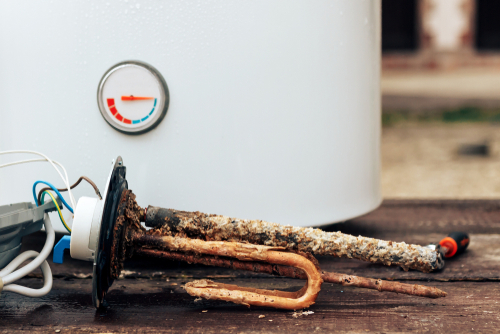
If your hot water looks orange, brown, or rusty but the cold water runs clear, the problem is inside your water heater. The anode rod, a sacrificial metal rod inside the tank designed to attract corrosion, may be fully depleted. Once it’s gone, the tank itself starts corroding from the inside.
Replacing the anode rod is a straightforward repair that costs a fraction of a new water heater. But if the tank walls have already started rusting through, replacement is the safer long-term move.
A licensed Asheville plumber can inspect the anode rod and tank condition to tell you which situation you’re dealing with.
3. Strange Noises From the Tank
Popping, cracking, rumbling, or banging sounds coming from your water heater are almost always caused by hardened sediment at the bottom of the tank. As the burner heats the water, steam bubbles push through the sediment layer, creating those sounds.
This isn’t just an annoyance. It means your unit is overworking to heat the water, which increases energy costs and accelerates wear on the tank. A professional flush and water heater inspection resolves this in most cases.
4. Water Pooling Around the Base
Any visible water around the base of your water heater requires immediate attention. It could be a leaking pressure relief valve, a loose connection, or, in the worst case, a crack in the tank itself.
A leaking tank cannot be repaired. Once the tank develops a crack or corrosion breach, replacement is the only option. If you notice pooling, shut off the unit and call for service before the leak worsens. Knowing what to do in a plumbing emergency can prevent a small leak from becoming major water damage.
5. The Unit Is Over 10 Years Old
Standard tank water heaters have a typical lifespan of 8 to 12 years. Tankless units can last 15 to 20 years with proper maintenance. If your tank water heater is approaching or past the 10-year mark and showing any of the signs on this list, repair costs may not be worth the investment.
The U.S. Department of Energy notes that newer high-efficiency models can reduce water heating costs by up to 50% compared to units manufactured a decade ago. If you’re spending money on repeated repairs for an aging unit, upgrading often makes more financial sense over a 3- to 5-year window.
6. Your Energy Bills Are Climbing
A water heater that’s losing efficiency uses more energy to deliver the same amount of hot water. If your utility bills have crept up without a change in usage patterns, your water heater could be the cause.
Sediment buildup, failing elements, and aging insulation all reduce efficiency over time. In Asheville homes where hard water is the norm, this efficiency loss happens faster than the national average because mineral accumulation accelerates the decline.
7. Frequent Repairs in a Short Period
One repair on an otherwise healthy water heater is normal. Two or three repairs within a 12-month period is a pattern. At that point, you’re feeding money into a unit that’s telling you it’s done.
Track your repair history. If the cumulative cost of recent repairs approaches 50% of what a new unit would cost, replacement is the smarter financial decision.
Repair or Replace? How to Decide
The decision comes down to three factors: age of the unit, extent of the problem, and total repair costs relative to replacement. A plumber who communicates honestly will walk you through both options with transparent pricing so you can make the call that fits your budget and timeline.
Sudo Plumbing, LLC provides water heater repair and replacement across Asheville, Weaverville, Arden, Leicester, Candler, Swannanoa, Black Mountain, Woodfin, and Fairview. Flat-rate pricing, no hidden fees, and a 100% satisfaction guarantee.
Call Sudo Plumbing, LLC: (828) 676-8772