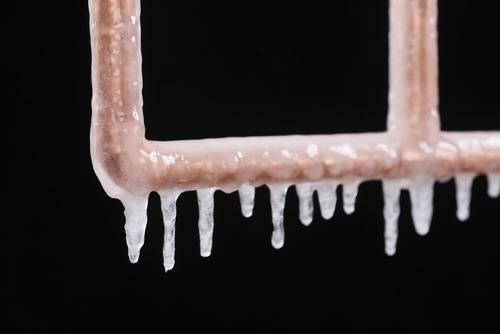
Quick Answer: Prevent frozen pipes by insulating all exposed pipes in crawl spaces, attics, garages, and exterior walls. Disconnect and drain outdoor hoses before the first freeze. Keep cabinet doors open under sinks on exterior walls during cold nights. Let a thin stream of water run from the farthest faucet when temperatures drop below 20 degrees. Know where your main shutoff valve is located so you can stop water flow immediately if a pipe does burst. In Asheville’s mountain climate, frozen pipe damage is preventable with the right preparation.
Why Asheville Homes Are at Higher Risk
Asheville’s elevation and mountain weather patterns create winter conditions that catch homeowners off guard. Temperatures can swing from 50 degrees during the day to below 20 overnight, and those rapid drops are when pipes freeze most often because there’s no gradual adjustment period.
Homes in Weaverville, Black Mountain, and other higher-elevation communities north and east of downtown face even colder overnight lows. Homes in Candler, Swannanoa, and Fairview also experience freeze risk, especially properties on north-facing slopes that get less winter sun.
Many Asheville-area homes have crawl spaces instead of full basements, which exposes supply and drain lines to ambient outdoor temperatures. Pipes running through uninsulated crawl spaces, exterior walls, and attached garages are the most vulnerable.
Insulate Every Exposed Pipe
Pipe insulation is the single most effective prevention measure. Foam pipe sleeves are inexpensive, widely available at hardware stores, and can be installed without tools. Focus on supply lines in crawl spaces, pipes in unheated garages, and any plumbing running through exterior walls.
For pipes that are hard to reach or run through tight spaces, heat cable (thermostatically controlled heat tape) provides an active warming solution. Heat cable wraps around the pipe and keeps it above freezing even during extended cold snaps.
The EPA recommends insulating both hot and cold water pipes, not just cold lines. Hot water pipes in cold spaces can freeze too, and insulating them also reduces energy loss from the water heater.
Disconnect and Drain Outdoor Hoses
A garden hose left connected to an outdoor faucet (hose bib) traps water in the line. When that water freezes, it can crack the pipe inside the wall where the damage isn’t visible until the thaw releases the water.
Before the first freeze of the season, disconnect all hoses, drain them, and shut off the interior shutoff valve that feeds each hose bib if your home has one. Open the outdoor faucet after closing the interior valve to drain any remaining water from the line.
If your home has frost-proof hose bibs, they still need the hose disconnected to function properly. A connected hose defeats the frost-proof design by preventing the water from draining.
Keep Heat Flowing to Vulnerable Areas
Pipes freeze when the air temperature around them drops below 32 degrees for an extended period. Keeping warm air circulating near vulnerable pipes prevents that.
Open cabinet doors under kitchen and bathroom sinks on exterior walls during cold nights. This allows heated room air to reach the pipes behind the cabinet. In bathrooms on exterior walls, this small step prevents the supply lines from reaching freezing temperatures.
If you have a crawl space, make sure the vents are closed during winter months and that any insulation between the floor joists is intact. A cold, drafty crawl space is the most common location for frozen pipes in Asheville homes.
Never turn your thermostat below 55 degrees, even when leaving the home for vacation during winter. The short-term energy savings are not worth the risk of a burst pipe flooding your home while you’re away.
Let Faucets Drip During Extreme Cold
When overnight temperatures are forecast to drop below 20 degrees, let a thin, steady stream of water (about the width of a pencil lead) run from the faucet farthest from the main shutoff. This keeps water moving through the pipes, and moving water resists freezing.
Open both the hot and cold sides slightly. The cost of the water used overnight is minimal compared to the cost of repairing a burst pipe and the resulting water damage.
Know Your Shutoff Valve Location
If a pipe does freeze and burst, the speed at which you stop the water determines how much damage your home sustains. Know exactly where your main water shutoff valve is located and confirm it works before winter arrives.
Test the valve by turning it off, checking that water stops at the faucets, and turning it back on. If the valve is stuck, corroded, or only partially closes, have a plumber replace it before cold weather hits. A shutoff valve that doesn’t work when you need it is the same as not having one.
What to Do If a Pipe Freezes
If you turn on a faucet and nothing comes out during a cold snap, a pipe is likely frozen. Do not use a torch, heat gun, or open flame to thaw it. Use a hair dryer, space heater aimed at the affected area, or warm towels wrapped around the pipe.
Start warming near the faucet and work back toward the frozen section so melting water can flow out through the open tap. Keep the faucet open while thawing to relieve pressure.
If you can’t locate the frozen section, if the pipe has already burst, or if you’re not comfortable thawing it yourself, call a licensed Asheville plumber immediately. A burst pipe that thaws without the shutoff closed can flood a home in minutes.
Prepare Before the First Freeze
Sudo Plumbing, LLC helps Asheville homeowners winterize their plumbing systems, repair freeze damage, and prevent future incidents. We serve Asheville, Weaverville, Arden, Leicester, Candler, Swannanoa, Black Mountain, Woodfin, and Fairview with flat-rate pricing and honest service.
Call Sudo Plumbing, LLC: (828) 676-8772
FAQs About Frozen Pipes in Asheville
At what temperature do pipes freeze?
Pipes can begin to freeze when the surrounding air temperature stays at or below 20 degrees Fahrenheit for an extended period. Uninsulated pipes in crawl spaces, exterior walls, and garages are most vulnerable. Wind chill doesn’t directly affect pipes, but it does cool the surrounding structure faster.
What should I do if I find a burst pipe?
Shut off the main water supply immediately, then open faucets to drain remaining pressure. Place towels or buckets to contain water. Call a licensed emergency plumber right away. Take photos of the damage for insurance documentation before cleanup begins.
Does homeowner’s insurance cover frozen pipe damage?
Most standard homeowner’s policies cover sudden and accidental water damage from burst pipes, but they typically do not cover damage if the homeowner failed to maintain adequate heat in the home. Check your policy and document your prevention steps. Maintaining your thermostat above 55 degrees is usually a policy requirement.
Can pipes freeze inside interior walls?
Yes, though it’s less common. Pipes running through interior walls that back up to uninsulated attics, garages, or crawl spaces can freeze if those adjacent spaces drop below freezing. Poor insulation or air leaks in the wall cavity allow cold air to reach pipes that appear to be in “warm” areas of the home.