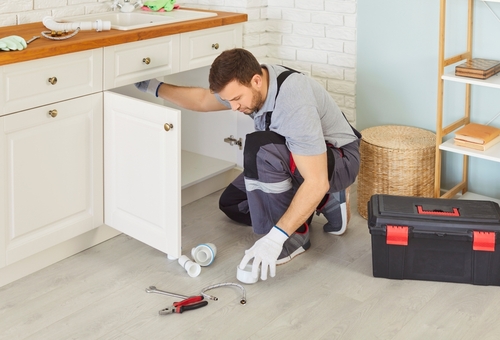
Quick Answer: If you find water under your sink, first place a bucket or towel under the leak to catch the drip. Then identify whether the leak is coming from the supply line connections, the drain pipe joints, the faucet base, or the garbage disposal. Turn off the supply valves under the sink (clockwise to close). If you can’t stop the leak, shut off the main water supply. Most under-sink leaks are repairable, but leaving them unchecked leads to cabinet damage, mold growth, and subfloor rot that costs far more than the original repair.
Step 1: Find the Source
Not all under-sink leaks come from the same place, and the source determines whether it’s a quick fix or a call to the plumber. Open the cabinet, clear everything out, and dry the area with a towel. Then run the faucet and watch carefully.
Supply line connections: These are the two flexible hoses (hot and cold) that connect the shutoff valves to the faucet. If water is dripping from the threaded connections where the hose meets the valve or the faucet tailpiece, the fitting may just need tightening. A quarter turn with an adjustable wrench often stops it.
Drain pipe joints: The P-trap assembly under the sink uses slip-joint connections held together by plastic or metal nuts. Over time, these loosen or the washers inside deteriorate. If water drips from the drain assembly only when water is running, a loose slip nut or worn washer is the likely cause.
Faucet base: If water pools around the base of the faucet on the countertop and drips down through the mounting hole, the faucet’s internal seals or O-rings have failed. This requires faucet repair or replacement.
Garbage disposal connection: The connection between the disposal and the drain or dishwasher hose can develop leaks. Check the mounting ring, the discharge pipe connection, and the dishwasher inlet.
Step 2: Stop the Water
Once you’ve identified where the leak is coming from, shut off the water to that fixture. The supply valves are usually located directly below the sink on the wall or floor. Turn them clockwise until they stop.
If the valves are corroded, stuck, or won’t fully close (common in older Asheville homes), shut off the main water supply to the house instead. Knowing where your main shutoff valve is located saves critical time in any plumbing situation.
If the leak is only on the drain side (P-trap or disposal), you don’t need to shut off supply valves. Just avoid running water in that sink until the repair is made.
Step 3: Assess the Damage
While the area is open and dry, check the cabinet floor, the back wall of the cabinet, and the area around the base of the sink for signs of ongoing moisture exposure. Soft or swollen particleboard, dark staining, musty odor, or visible mold all indicate the leak has been happening longer than you realized.
This is the same hidden damage risk that affects homes during a kitchen floor replacement. The space under the sink is the most common location for undetected water damage in any kitchen or bathroom.
If the cabinet floor is soft or shows mold, the repair scope expands beyond just fixing the leak. The damaged material needs to be addressed before it spreads further.
What You Can Fix Yourself
Some under-sink leaks are straightforward. If the supply hose connection is dripping, hand-tighten plus a quarter turn with a wrench usually stops it. If a slip-joint nut on the P-trap is loose, tighten it by hand or with channel-lock pliers. If the P-trap washer is worn or cracked, replacement washers are available at any hardware store and the swap takes five minutes.
When to Call a Plumber
Call a licensed Asheville plumber when the leak is coming from inside the wall (supply lines behind the drywall), the shutoff valves won’t close or are leaking themselves, the faucet needs internal seal or cartridge replacement, the garbage disposal is leaking from the body or mounting ring, the drain pipe is cracked or corroded (common with old metal P-traps), or you’ve tightened connections and the leak persists.
Under-sink leaks that go unrepaired for weeks or months can cause subfloor rot and mold problems that are expensive to remediate. A repair that costs $150 today can prevent $3,000 in cabinet and subfloor restoration next year.
Preventing Under-Sink Leaks
The best prevention is periodic inspection. Every few months, open the cabinet, feel the supply hose connections for moisture, check the P-trap joints, and look at the cabinet floor for water stains. Catching a drip early is always cheaper than discovering a puddle later.
Homes in Asheville with hard water should pay extra attention to supply line connections. Mineral deposits can build up around threaded fittings and slowly compromise the seal over time.
Including under-sink checks as part of your annual plumbing maintenance routine prevents the surprise discoveries that lead to stressful emergency calls.
Get the Leak Fixed Right
Sudo Plumbing, LLC handles under-sink leak repairs, faucet replacement, and cabinet damage assessment across Asheville, Weaverville, Arden, Leicester, Candler, Swannanoa, Black Mountain, Woodfin, and Fairview. Honest flat-rate pricing and no hidden fees.
Call Sudo Plumbing, LLC: (828) 676-8772
FAQs About Pipe Leaking Under Sink
Can I use tape or sealant to fix a leaking pipe under the sink?
Plumber’s tape (Teflon tape) can help seal a threaded supply connection that’s dripping at the joint. But tape and sealant are not reliable fixes for cracked pipes, failed washers, or corroded fittings. They are temporary measures at best, and the leak usually returns.
How much damage can a small leak under the sink cause?
A small drip can cause significant damage over time. Even a slow leak can rot the cabinet floor, promote mold growth behind the wall, and weaken the subfloor underneath. In Asheville’s humid climate, mold from undetected leaks spreads faster than in drier regions.
Why does my P-trap keep leaking after I tighten it?
If tightening the slip-joint nut doesn’t stop the leak, the rubber washer inside the connection is likely worn, cracked, or deformed. Replacing the washer is the fix. If the P-trap itself is cracked or corroded, the entire trap needs to be replaced.
Should I replace supply hoses under the sink preventively?
Yes. Braided stainless steel supply hoses are durable, but rubber hoses deteriorate over time and can burst without warning. Replacing rubber supply hoses with braided stainless steel lines every 5 to 8 years is a low-cost preventive measure that avoids potential flooding.